Monochrome: The Softer Side of Metal Music Subcultures
Updated: Feb 27

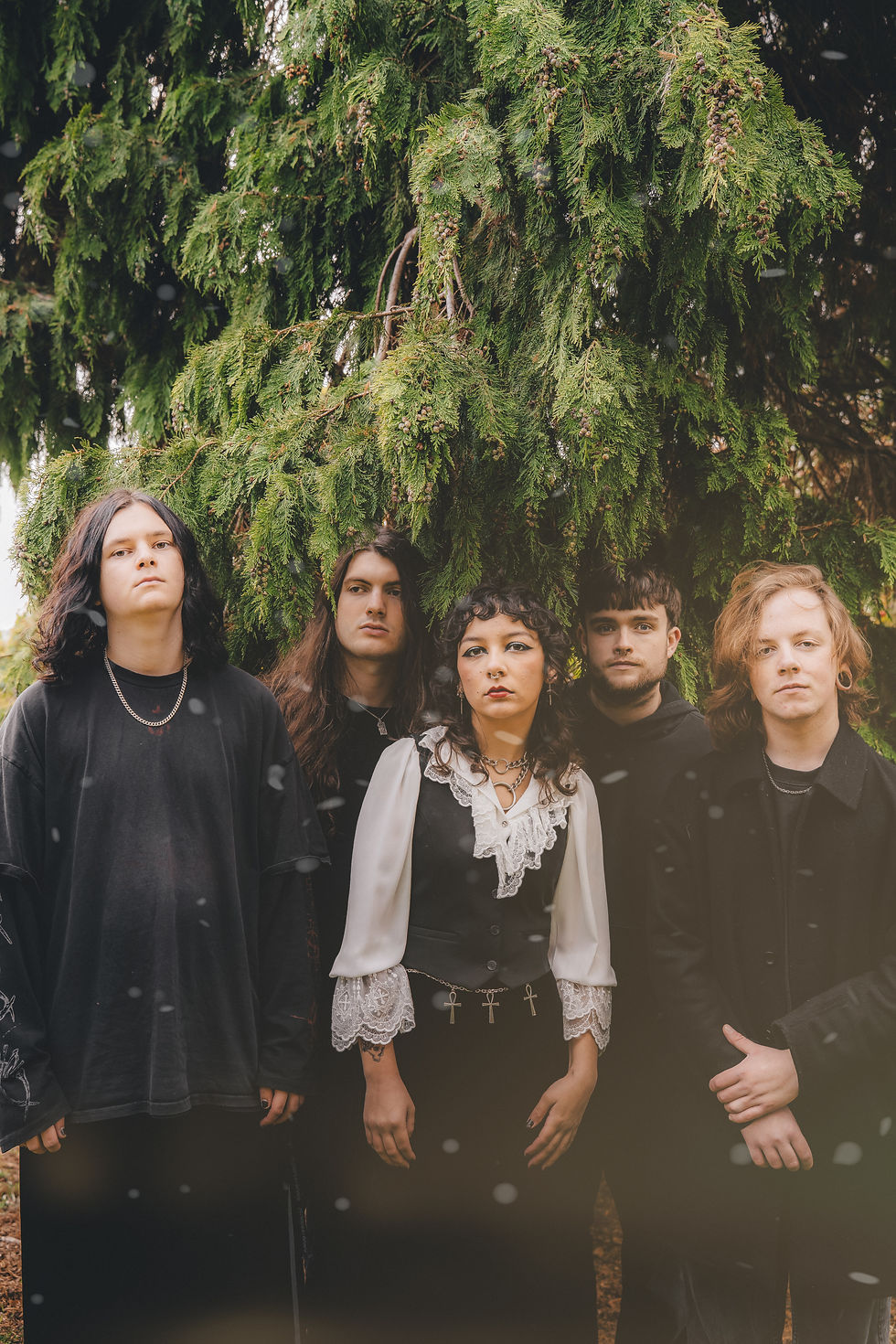
From the birth of metal in the 60s and 70s, there have been associations with Satanism, violence and aggression. However, ask anyone who actually is involved in the scene, and they will happily inform you that these connotations do not depict the majority of the metal music subcultures. With diversification of genre being so prominent in modern music, it’s hardly surprising that the heavier scenes are also evolving. I had the distinct pleasure in sharing a Monday evening with Monochrome, an up and coming metal band from the South West. I wanted to focus on how their band sits within alternative music and the communities that are behind the genre.
When asked about their ambient metal sound and their unique footing in the metal core scene, I’m told: “I've always quite liked stuff that's equally pretty sounding and really heavy at the same time. I want our music to be something that you can mosh and cry to at the same time.” (Algernon, vocals and lead guitar). When listening to Monochrome, there is certainly an element of beauty within the harsher elements of the tracks. Within their latest EP, ‘Haunted Faith and Hidden Trust’, this is expressed lyrically, particularly in the song ‘Bones’, and also in the production: “It's perfect, but it's still raw” (Algernon). I’m told that the band takes a lot of production inspiration from “the old Sleep Token albums, produced by George Lever, the Thornhill stuff, again, George Lever, and then a lot of Deftones” (Jay, drummer).
"I want our music to be something that you can mosh and cry to at the same time.” (Algernon, vocals and lead guitar).
So where does this niche, forefronted by artists such as Loathe and Thornhill, fit into the metal scene? I was curious to know how the artists feel the wider community of alternative rock has reacted to this blended sonic experience.
Joe (bassist) explains that “it's got a lot of hate from a lot of different sides of metal, because it gets a little bit softer.”
Algernon adds “The lyrics are more relatable [in this genre].”


From this new branch of blurred genre, we see bands come forward and start to season mainstream music. But, is this a good thing for those passionate about metal scene’s rooted history in being a voice for the under-represented?
Jay and Josh immediately jump in and say “yes” here, with Algernon adding“I think it's quite cool. Having a wider sound palette lets you play with more bands, and gets people into metal that might not have already been into metal in the first place. [...] I think rising tides raise all ships. It's cool that other people are getting into it as much [as they are] now.”
I was curious how Monochrome has found the reaction from people within the traditional side of the scene. Eliza says, “So often people are so confused by us because we are female fronted, and because there's already the genre blending. And I just think people have so many preconceptions of what we're going to sound like, and people are always surprised by something when they hear us for the first time.”
Being a female fronted band in a male dominated genre can, unfortunately, mean bands such as Monochrome are labelled differently, regardless of their intent:
“We get compared to a lot of bands, for no other reason other than their singer is also female, even though [Eliza] sounds nothing like them.” (Algernon).
While Eliza has experienced blatant sexism within this scene, including an incident where a crew member at a festival had assumed she was the band manager, as opposed to the front woman, there are positives. She says: “90% of the time, it's really great. And I think the best thing is getting to meet women in the audience and encourage them to do shit that scares them, and do shit that people think that they can't do for some reason. If I can just inspire someone then that is really huge.”
"To be able to be in a room full of people who understand who you are and take you seriously; it is affirming.” (Eliza, lead vocals)
This sense of building community and kinship is deeply rooted in metal, due to the people within it needing somewhere to feel as though they belong:
“I feel like we've probably all experienced feeling othered and feeling like we don't fit in just for being who we are sometimes. So yeah, to be able to be in a room full of people who understand who you are and take you seriously; it is affirming.” (Eliza)
This strong bond with those in the scene is further reflected in the live scene of metal, which truly is not something that cannot be captured unless you are there. As Joe says, “it really thrives live”, and this is so abundantly clear in the smaller communities. Joe goes on to explain the difference in the reception between genres:
“I've been in different types of bands and when you play with smaller bands, you'd expect [other artists] to kind of pick you up and help you as they grow as well, but they don't. People see you as competition.”
Jay mentions this idea of a safe environment: “Everyone who's in the crowd is into it. It's almost like these places have bubbles around them” and it’s clear that the community will celebrate their own:
“Like in the more kind of local DIY scenes, everyone just wants to support each other if they're an alternative or metal band.” (Algernon)
If you’re curious about becoming part of this strong and welcoming community, I was made aware of a youth club called Live Wire (@livewireyouth.music on IG), based in Saltash in Cornwall, and Eliza summarises her experience for anyone in that area who is interested:
“There is a beautiful, vibrant metal scene in Devon and Cornwall because of this youth club called Live Wire, which I went to twice a week for 50p and I would have free instrumental lessons, free vocal lessons, a stage to rehearse, and rehearsal rooms. And I met so many amazing people, and I got free mental health counseling while I was there [...] It really is just such a beautiful culture.”
This piece is just a fragment of how wide ranging the alternative scene really is and continues to become, so next time you think of going to a heavy gig, we say go for it! Support your local communities, and you might find a softer side of the darker genres!!!
Thank you so much to Monochrome for giving GEAR the opportunity to interview them, it has been a pleasure. If you want to hear more from these guys and what they have coming next, go give them a follow on IG @monochromemetal !
Want to be interviewed for our magazine? Let us know by completing our sign up form!
Written by Daisy McCaig

Comments